
What is Finance Ops? The Modern Approach to Business Finances
Finance Ops is redefining how growing companies handle accounting, payroll, and compliance. Here's what it means and why it matters.
For decades, "managing your company's finances" meant one of two things: hire an accountant or find a firm. You'd drop off your documents once a month, get a report back (eventually), and hope everything was filed on time.
That model worked when business moved slowly. It doesn't work anymore.
Enter Finance Ops — a term borrowed from the tech world that's reshaping how growing companies think about their financial back office.
Finance Ops, defined
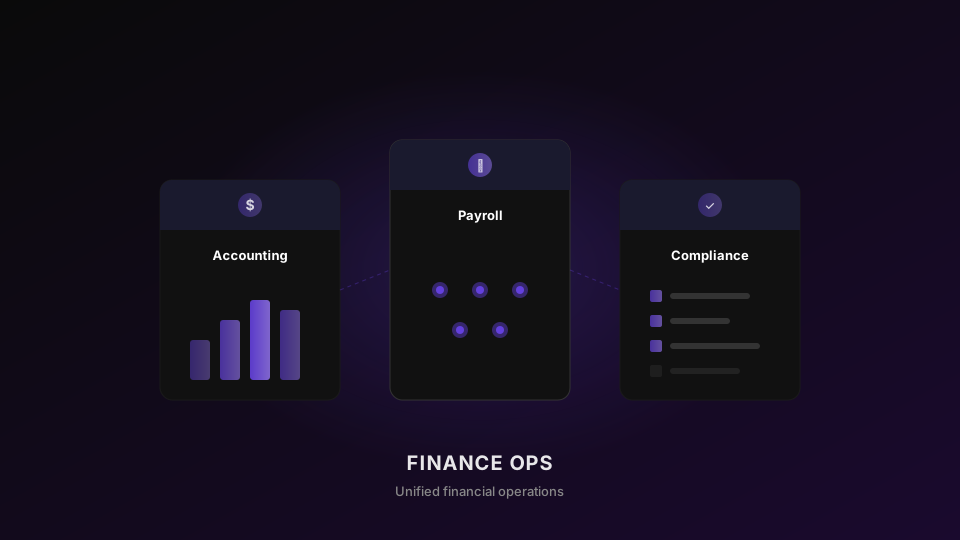
Finance Ops (short for Financial Operations) is the practice of treating your company's financial infrastructure — accounting, payroll, tax compliance, reporting — as a unified, continuously running operation rather than a set of disconnected tasks.
Think of it like DevOps, but for money. Where DevOps brought automation, monitoring, and continuous delivery to software teams, Finance Ops brings the same mindset to the finance function: automate what can be automated, monitor in real-time, and deliver insights continuously — not just at quarter-end.
How Finance Ops differs from traditional accounting
The difference isn't just technological — it's philosophical.
- Traditional accounting is backward-looking. You get reports about what happened last month, last quarter, last year. By the time you see the data, the decisions have already been made.
- Finance Ops is forward-looking. Real-time dashboards, automated alerts, and proactive analysis mean you know where your money is now — and where it's going.
Traditional firms batch-process your work. Finance Ops runs continuously. Traditional firms communicate via email attachments. Finance Ops gives you a dashboard, a Slack channel, or both.
The three pillars of Finance Ops
1. Accounting & compliance
This is the foundation: bookkeeping, tax filings, financial statements, and regulatory compliance. In a Finance Ops model, these aren't annual chores — they're running processes with built-in quality checks and deadline tracking.
2. Payroll & HR finance
Salaries, social security, withholding taxes, benefits, overtime — payroll is complex and high-stakes. Finance Ops treats payroll as a critical operation with zero tolerance for errors, not a side task handled in a spreadsheet.
3. Financial intelligence
This is where Finance Ops truly separates from traditional accounting. Cash flow forecasting, margin analysis, tax optimization strategies, and scenario planning turn your financial data into strategic advantage.
Who needs Finance Ops?
Finance Ops isn't just for startups or tech companies. Any business that meets a few criteria can benefit:
- You have employees (even just a few)
- You operate across borders or deal with multiple currencies
- You need real-time visibility, not quarterly reports
- You want to focus on your core business, not admin
- You value digital tools over paper-based processes
In Portugal, where tax and labor regulations are complex and frequently updated, having a Finance Ops approach is especially valuable. The cost of non-compliance is high, and the benefit of proactive financial management is immediate.
The subscription model
One of the hallmarks of modern Finance Ops is the subscription model. Instead of hourly billing or opaque annual contracts, you pay a fixed monthly fee for a defined scope of services. You know what you're paying, you know what you're getting, and there are no surprises.
This model aligns incentives: the provider succeeds when your operations run smoothly, not when they bill more hours. It also makes financial planning easier — your finance function becomes a predictable operating expense, not a variable cost.
The bottom line
Finance Ops isn't a buzzword — it's a shift in how businesses relate to their financial infrastructure. Instead of treating accounting as a necessary evil that happens behind closed doors, it becomes a strategic function that powers better decisions.
If you're still relying on a traditional model and wondering why your finances feel disconnected from your business, Finance Ops might be the framework you've been looking for.
Onboardio Team
Finance Ops
The Onboardio team helps businesses across Portugal modernize their financial operations with subscription-based accounting, payroll, and compliance services.
Related articles
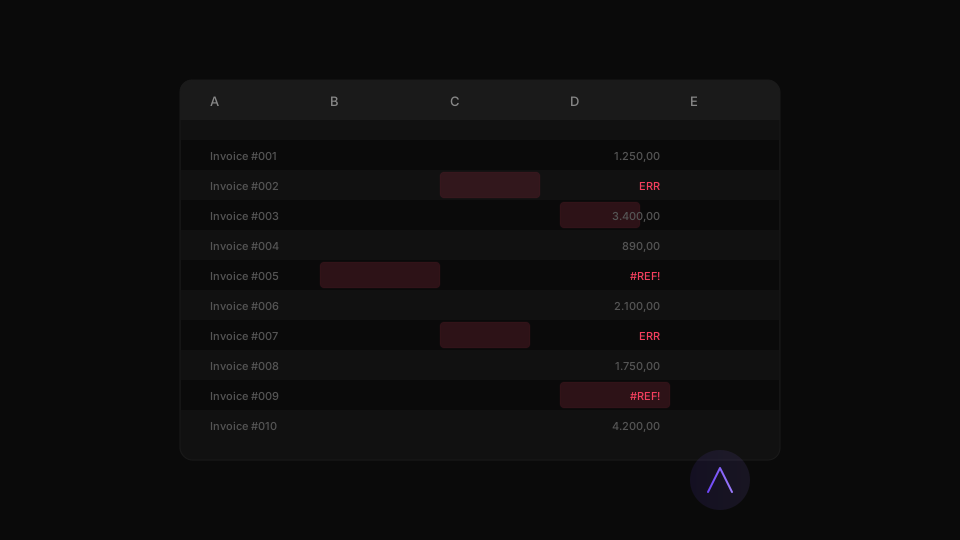
5 Signs Your Business Has Outgrown DIY Accounting
Spreadsheets worked when you started. But growth changes everything. Here are the signals that it's time to hand your finances to professionals.
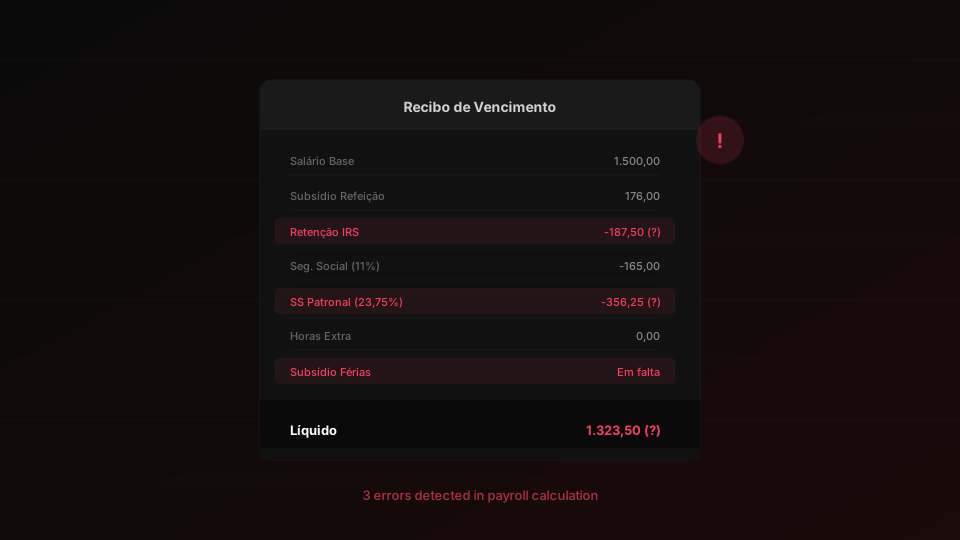
The True Cost of Getting Payroll Wrong in Portugal
Late payments, wrong tax codes, missing social security contributions — payroll errors in Portugal carry real financial and legal consequences.